
How to Identify Real Jade vs Fake Jade: A Complete Guide for Western Buyers
Navigating the world of jade can be challenging, especially when distinguishing genuine pieces from imitations. This comprehensive guide will equip you with the knowledge to confidently identify real jade and avoid common fakes.
How to Identify Real Jade vs Fake Jade: A Complete Guide for Western Buyers
Jade has captivated humanity for millennia, revered for its stunning beauty, cultural significance, and perceived metaphysical properties. From ancient emperors to modern collectors, the allure of this precious gemstone is undeniable. However, the market is rife with imitations, making it crucial for discerning buyers, especially those new to the world of jade, to understand how to identify real jade. This guide will walk you through the essential steps to distinguish genuine jade from its many imposters.
Understanding What 'Real Jade' Truly Means
Before diving into identification techniques, it's vital to clarify what constitutes 'real jade.' The term 'jade' primarily refers to two distinct mineral species: Jadeite and Nephrite. Both are considered genuine jade, but they possess different chemical compositions, hardness, and visual characteristics.
- Jadeite: Often referred to as 'Imperial Jade' when it exhibits a vibrant emerald green, jadeite is the rarer and generally more valuable of the two. It's a pyroxene mineral, known for its glassy luster and often translucent quality.
- Nephrite: A calcium magnesium silicate mineral, nephrite is more abundant and typically found in a wider range of colors, including dark green, white, black, and even brown. It has a slightly greasy or waxy luster and is known for its exceptional toughness.
Both jadeite and nephrite are genuine jade. The challenge lies in differentiating them from non-jade materials and treated jade.
Common Jade Imitations and Treatments
Many materials are passed off as jade. Knowing these common fakes is your first line of defense:
- Serpentine: Often called 'New Jade' or 'Olive Jade,' serpentine is softer than true jade and can be scratched with a knife.
- Bowenite: A type of serpentine, it often has a waxy feel and can mimic nephrite.
- Quartz (Aventurine, Chrysoprase): These gemstones can have a similar green hue but lack the characteristic fibrous structure of jade.
- Dolomite Marble: Sometimes dyed green to resemble jade, it's much softer.
- Glass: Easily identifiable by air bubbles and a cold, smooth feel.
- Plastic: Lightweight and warm to the touch, plastic is an obvious fake.
Beyond outright fakes, 'treated jade' also exists. These are genuine jade materials that have undergone processes to enhance their appearance, often diminishing their value:
- Type A Jade: Natural, untreated jadeite or nephrite. This is the most valuable and sought-after. Our jadeite jewelry is always Type A.
- Type B Jade: Chemically bleached to remove impurities, then impregnated with polymer resin to improve transparency and luster. This treatment significantly reduces durability and value.
- Type C Jade: Dyed to enhance or change its color. The dye can fade over time and may not be colorfast.
- Type B+C Jade: A combination of bleaching, polymer impregnation, and dyeing.
Practical Tests to Identify Real Jade
While definitive identification often requires gemological equipment, several practical tests can help you assess a piece:
1. The 'Coldness' Test
Genuine jade, especially jadeite, feels distinctly cold to the touch and takes longer to warm up against your skin than glass or plastic. Hold the piece in your hand for a moment; if it quickly warms, it's likely not real jade.
2. The 'Sound' Test (for Bangles)
For jade bangles or larger pieces, gently tap it with a metal object (like a coin or another jade piece). Real jade, particularly high-quality jadeite, will produce a clear, resonant, bell-like sound. Fakes like glass or plastic will sound dull or clinky.
3. The 'Scratch' Test (Use with Caution)
This test should be used with extreme caution as it can damage softer fakes. Nephrite has a Mohs hardness of 6-6.5, and jadeite is 6.5-7. You can try to scratch an inconspicuous area of the piece with a steel knife (hardness 5-5.5). If the knife leaves a scratch, it's likely not real jade (e.g., serpentine, marble). If the jade scratches the knife, it's a good sign. However, if it doesn't scratch the jade, it could still be glass or quartz, which are harder. This test is more useful for ruling out softer fakes.
4. The 'Luster' and 'Texture' Test
Observe the surface luster. Nephrite typically has a greasy or waxy luster, while jadeite often exhibits a vitreous (glassy) luster. Fakes like plastic will look dull, and glass might be too perfectly smooth. Real jade often has subtle imperfections, natural inclusions, or a slightly uneven texture that adds to its character. Look for a fibrous, interlocking grain structure, especially in nephrite, which contributes to its exceptional toughness.
5. The 'Specific Gravity' (Density) Test
Jade is surprisingly dense for its size. If a piece feels unusually light for its volume, it might be a fake. This test is more subjective without a scale but can be a quick indicator. Jadeite has a specific gravity of 3.33, and nephrite is 2.9-3.0.
6. Examine for Bubbles and Dye
Under magnification (a jeweler's loupe is ideal), look for internal air bubbles, which are a tell-tale sign of glass. Also, examine the color. If the color appears unnaturally uniform, too bright, or concentrates along cracks and fissures, it could be dyed jade (Type C). Bleached and polymer-filled jade (Type B) might show a dull, plastic-like sheen under magnification, or tiny bubbles within the polymer.
The Importance of Reputable Dealers
The most reliable way to ensure you're purchasing genuine, untreated jade is to buy from a reputable dealer. A trustworthy vendor will:
- Provide clear information about the jade's type (jadeite or nephrite) and any treatments.
- Offer certification from independent gemological laboratories for high-value pieces.
- Have a strong reputation and positive customer reviews.
- Be transparent about their sourcing and practices.
At JJJadeite.com, we are committed to offering only authentic, natural Type A jadeite and nephrite. Each piece in our collection is carefully selected and verified to ensure its genuine quality and natural beauty.
Conclusion
Identifying real jade requires a combination of knowledge, careful observation, and sometimes, a little help from experts. By understanding the differences between jadeite and nephrite, recognizing common fakes and treatments, and applying practical tests, you can become a more confident and informed buyer. Ultimately, investing in genuine jade from a reputable source like JJJadeite.com ensures you acquire a piece of lasting beauty and value, free from doubt.
Tags
Featured Piece
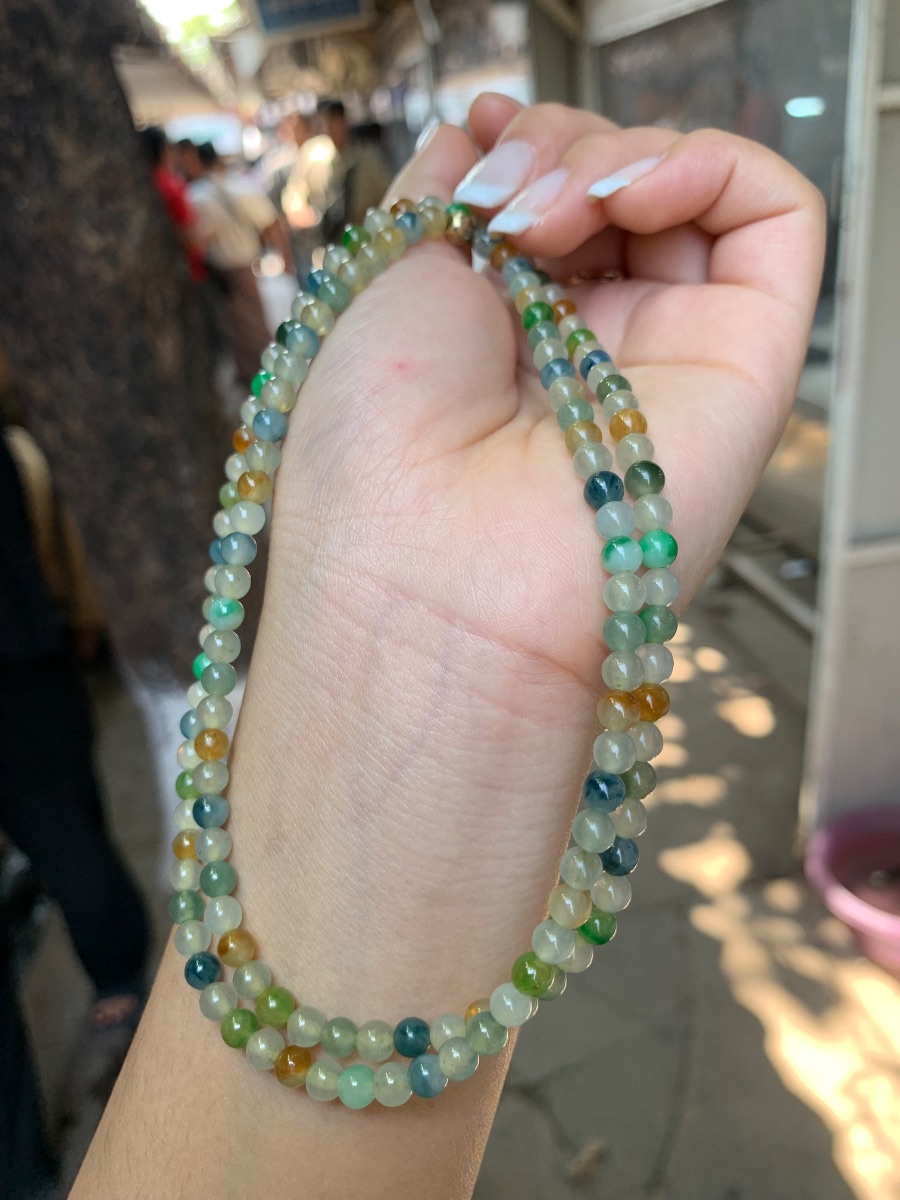
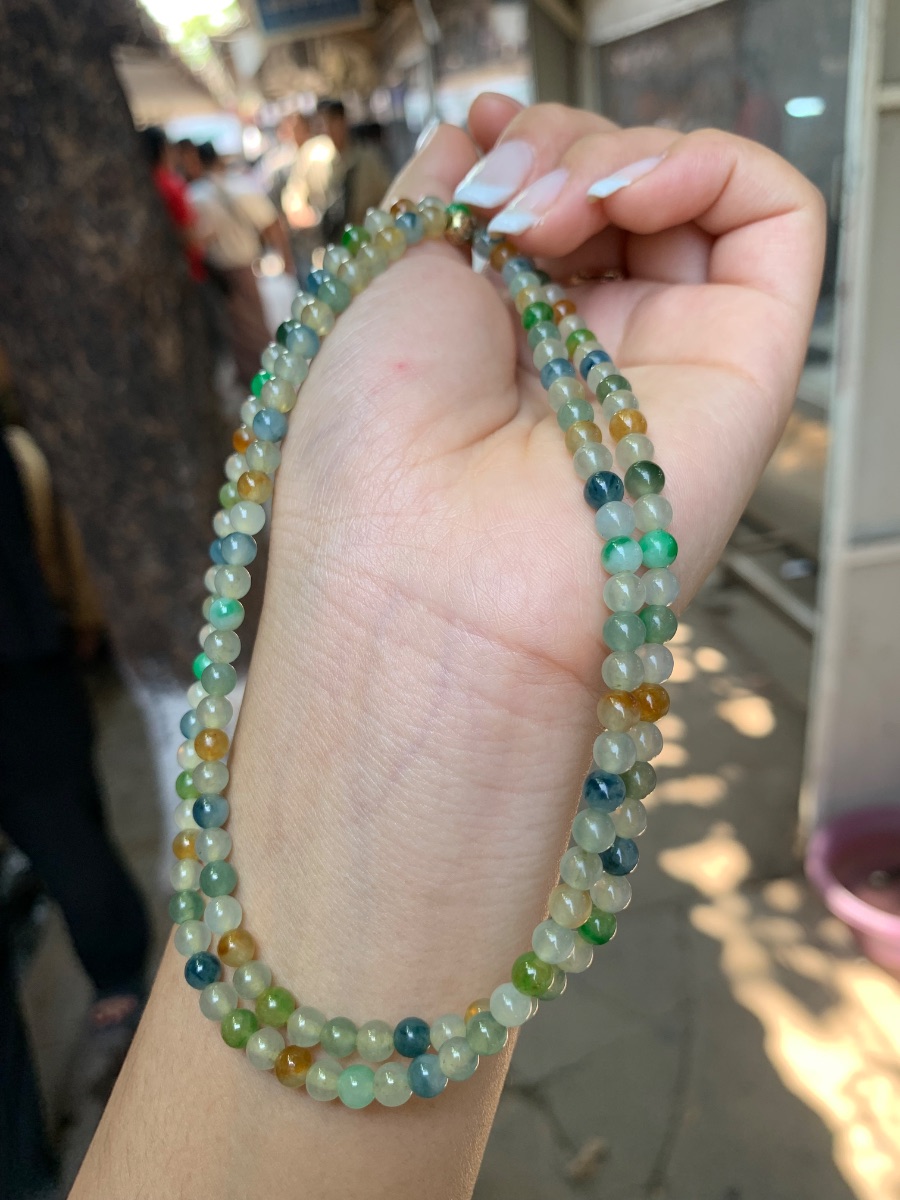
Multi-color Jade Beaded Necklace with Mixed Hues
other
Origin
Myanmar
Material
Natural Jadeite
Description
This charming necklace features small, round jade beads in a beautiful mix of green, blue, brown, and translucent hues, each with unique natural patterns and subtle variations. The smooth, polished beads are strung to create a delicate, versatile piece that complements various styles. With its colorful yet understated design, it serves as a lovely everyday accessory or a thoughtful gift for those who appreciate the natural beauty of gemstones.
Want to see authentic imperial jadeite in person? Join our live streams to evaluate pieces in real lighting and get the best prices directly.